


Spring Break = more time, more energy… and a lot of “what should we do next?”
Good news: you don’t need a lab to turn your home into a place full of curiosity. With just a few everyday items, you can explore science in ways that feel more like play than learning.
1. Make Your Own Rainbow 🌈
What you’ll need:
A glass of water, a flashlight (or sunlight), and a white wall or piece of paper
What to do:
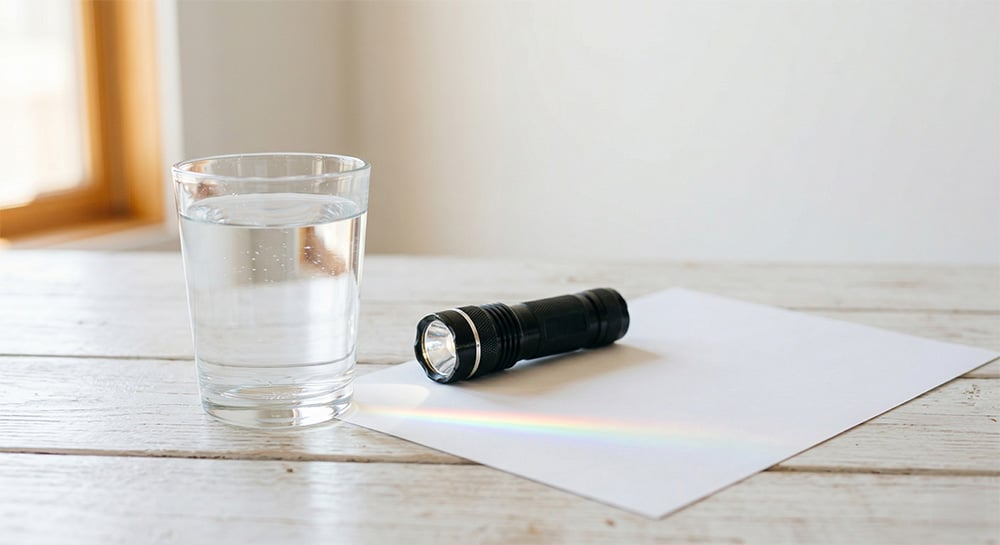
Shine light through the glass of water onto a wall. Adjust the angle until you see a rainbow appear.
What’s happening?
Light might look white, but it’s actually made up of many colours. When light passes through water, it bends (this is called refraction) and splits into a spectrum—aka, a rainbow.
Try this:
Move the glass closer or farther away. How does the rainbow change?
2. Bend Water with Static Electricity ⚡
What you’ll need:
A balloon, dry hair, and a thin stream of running water
What to do:
Rub the balloon on your hair, then slowly bring it close to a thin stream of water from a tap.
Watch what happens.
What’s happening?
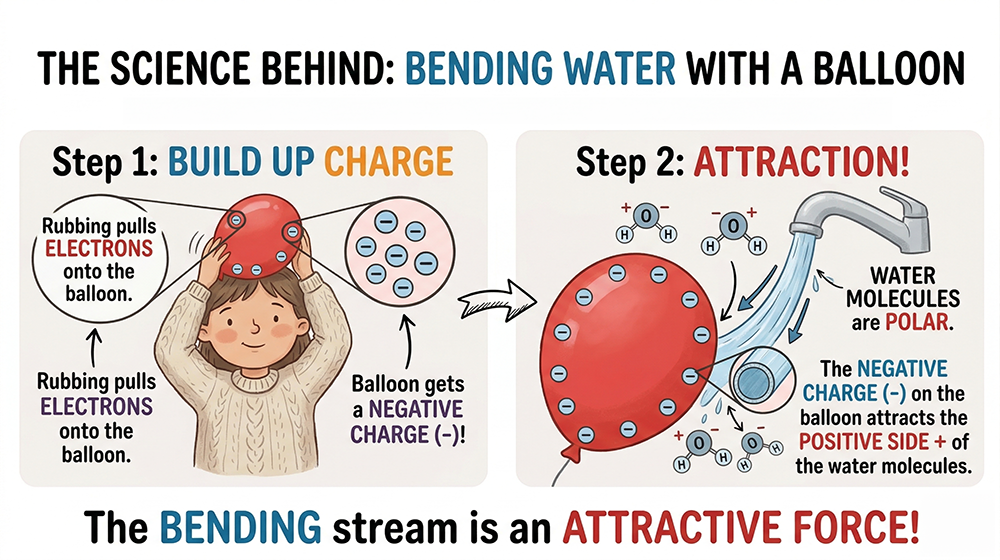
Rubbing the balloon builds up static electricity. The charged balloon attracts the water molecules, causing the stream to bend.
Yes—you just controlled water with electricity.
Try this:
Does it work better with dry hair or damp hair?
3. Watch Water Disappear 💧
What you’ll need:
Two small containers, water, and a sunny window
What to do:
Fill both containers with the same amount of water. Place one in a sunny spot and one in the shade.
Check back later.
What’s happening?
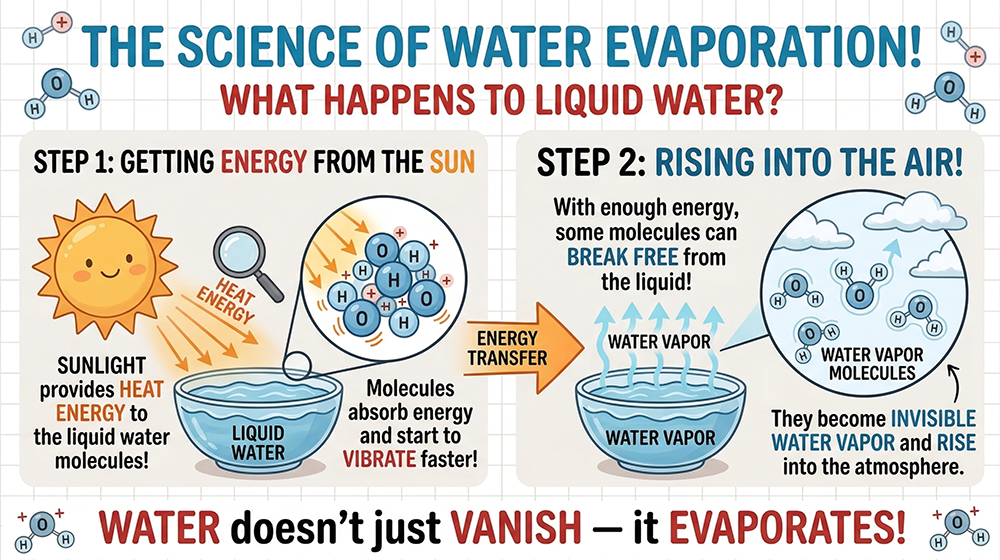
Water doesn’t just vanish—it evaporates. Heat from the sun gives water molecules enough energy to turn into invisible water vapor and rise into the air.
Try this:
Which one disappears faster? Why do you think that is?
4. Create a Fizzy Reaction 🧪
What you’ll need:
Baking soda, vinegar, and a cup
What to do:
Add baking soda to a cup, then pour in vinegar.
Get ready for bubbles.
What’s happening?
This is a chemical reaction. When baking soda and vinegar mix, they create carbon dioxide gas—the same gas that makes soda fizzy.
That fizz? That’s gas escaping.
Try this:
Add a few drops of food colouring or a bit of dish soap. What changes?
5. Grow a Crystal (Yes, Really) ✨
What you’ll need:
Sugar, hot water, a jar, and a string
What to do:
Dissolve as much sugar as possible into hot water. Pour it into a jar, suspend a string inside, and wait a few days.
What’s happening?
As the water cools and evaporates, the sugar forms crystals along the string. You’re watching molecules organize into a solid structure.
Science you can see.
Try this:
Check your crystal every day. How does it grow?
Turn Curiosity Into a Day Out at Spark!
%20(600%20x%20450%20px)%20(5).png?width=600&height=450&name=Untitled%20(600%20x%20450%20px)%20(600%20x%20450%20px)%20(5).png)
See science in action this Spring Break at TELUS Spark Science Centre!
What’s happening:
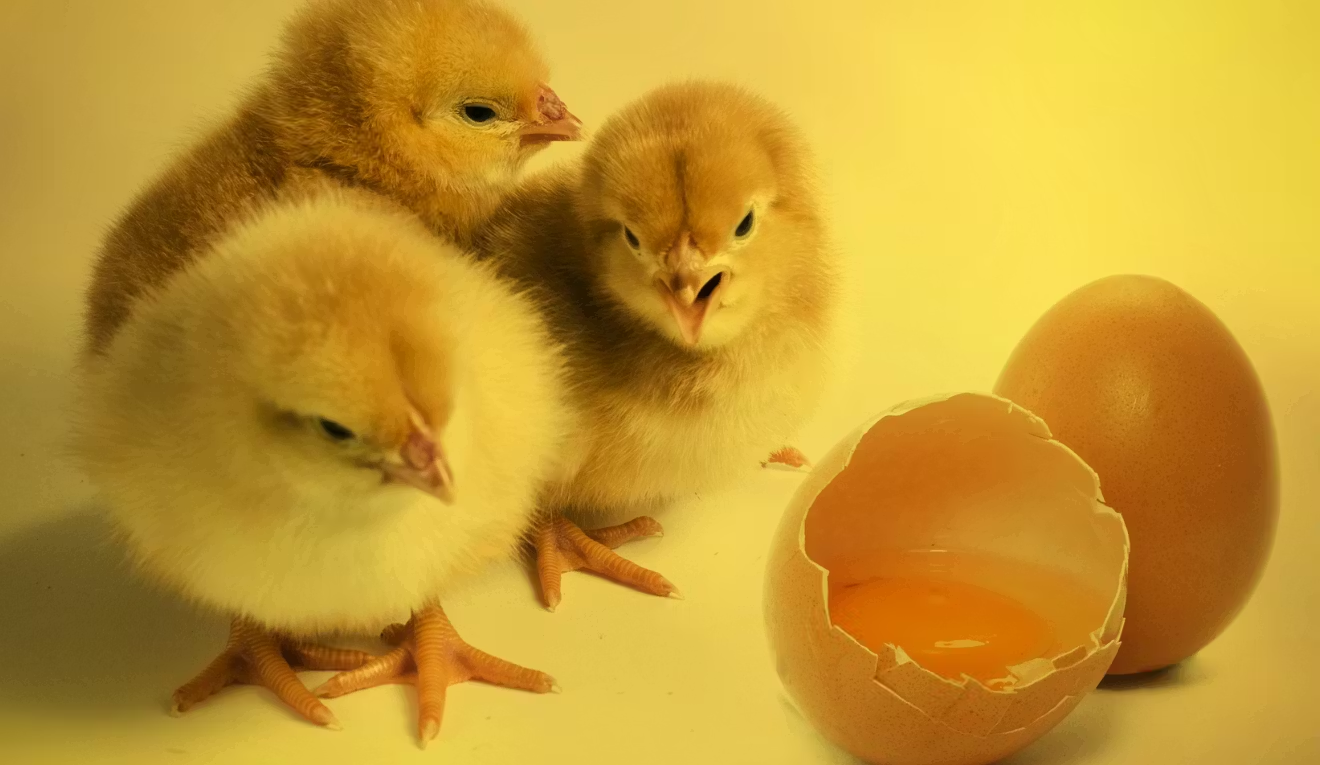
- Chicken Watch — see eggs hatch in real time
- Easter Egg Hunt — with a science twist
- Mission Moon (Infinity Dome) — an immersive space journey
- Rocketry — build and launch
- Circuit Buddy Workshop — hands-on electricity
- Picture, Pixel, Print — how images come to life
- and more!
There’s something happening around every corner.
Science isn’t just something you read about. It’s something you do!

Keep the Questions Coming
Why do bubbles form? Why does water bend? Why do crystals grow?
If you’ve got a question you’ve always wondered about…
Drop it in the comments and we'll feature it in a future post!

Comments and Questions